
UK Sanctions Eight Israeli Firms Building West Bank Settlements, Targets Group Blocking Gaza Aid
Foreign Secretary Ed Miliband moves against settlement construction companies just before Israel allocates tenders for the E1 project, and sanctions a rightwing activist group tied to blocking aid convoys.
Source: The Guardian — Middle East · published November 17, 2026
Foreign Secretary Ed Miliband announced the United Kingdom's first sanctions against Israeli companies building settlements in the occupied West Bank, timed just before Israel was set to allocate construction tenders for the E1 settlement project.
The measures name eight Israeli construction, property development and architectural firms, targeting their access to finance over work planning, building, supplying or marketing housing and public infrastructure in West Bank settlements. Miliband also sanctioned a rightwing Israeli activist group he said had been involved in blocking humanitarian aid into Gaza as recently as last month. The group was not named in the announcement.
The sanctions build on a framework Miliband set out on September 8, when he expanded the UK's Global Human Rights sanctions regime and outlined a separate, not-yet-implemented set of measures to ban trade in goods produced in illegal settlements. At the time, the Foreign Office said it would continue to welcome trade with what it called "green line Israel," distinct from settlement activity.
'Facilitated and encouraged'
The Foreign Office said the current Israeli government had, in its words, "not only refused to clamp down on illegal settlement, but has facilitated and encouraged them." It said more settlements had been approved in the four years of the current government than in the preceding twenty.
"My message on E1 is clear: do not bid, do not build, and do not profit from the destruction of the two-state solution," Miliband said.
He added that the UK would not stand by "while those blocking desperately needed aid deepen the intolerable suffering of civilians in Gaza," calling the status quo in the West Bank and Gaza unacceptable.
Aid blockage disputed
The announcement arrives alongside continuing UK criticism of Israeli restrictions on dual-use goods entering Gaza, a dispute that has run more than two years. The Foreign Office said catastrophic floods have left nearly 4,000 Gaza households without shelter, with 1.4 million people living in tents or makeshift housing. According to the UN, more than 150,000 tents and 300,000 tarpaulins purchased by humanitarian partners are sitting outside Gaza, held by Israeli authorities, alongside a continuing block on timber needed for emergency shelter kits.
The Israeli government has said restrictions on certain goods are necessary to prevent Hamas from obtaining materials that could be used in attacks on Israel. That justification remains disputed by aid agencies and the UK government.
Miliband paired the sanctions with what he framed as an opening to a new Israeli government, saying the UK was "committed to working productively" with Israel and the Palestinian Authority. Israel's possible next prime minister, Gadi Eisenkot, has said he would take a tougher line on settler violence than Benjamin Netanyahu, according to Guardian reporting; that pledge has not yet been tested against policy.
The practical bite of the sanctions is untested. It remains unclear how dependent any of the eight named firms are on British finance, meaning enforcement will hinge on banks and investors complying rather than on direct UK leverage over the companies' operations in the West Bank.
Sources & Documentation
Related Coverage

UN: Settlers Carried Out 397 Attacks in West Bank in October, Most Since Monitoring Began in 2006
OCHA documented 397 settler attacks in the West Bank in October 2026, the highest monthly total since UN monitoring began in 2006, many tied to the olive harvest.
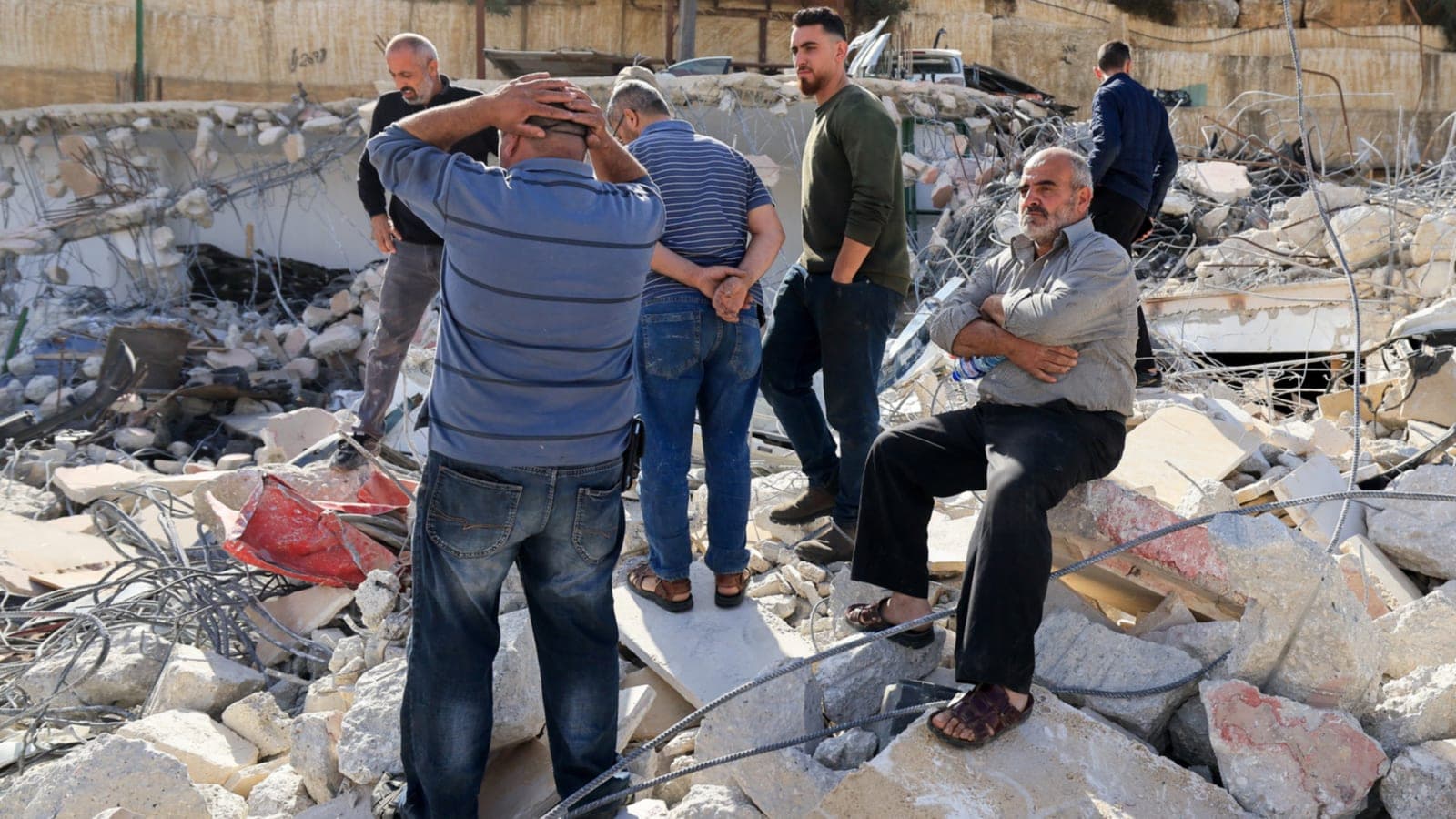
Israeli Military Ends 11-Day Hebron Raid That Displaced Hundreds, Demolished Homes and a Vehicle Yard
An 11-day Israeli raid in Hebron displaced hundreds of families and destroyed homes and businesses, residents and the local chamber of commerce say.

Israeli Forces Fire Tear Gas Into West Bank School, Dozens of Students and Teachers Suffocate
Israeli forces fired tear gas at a school in Al-Mughayyir, suffocating dozens of students and teachers, as occupiers blocked roads and seized livestock across the West Bank.