
Israeli Military Ends 11-Day Hebron Raid That Displaced Hundreds, Demolished Homes and a Vehicle Yard
Residents returning to al-Jalda found doors torn from hinges and human waste left inside; a Farsh al-Hawa business owner says soldiers gave him one hour before bulldozing a facility holding 600 vehicles.
Source: Middle East Eye · published November 4, 2026
Abbas Mujahid came home to find the iron front door torn off its hinges, the gypsum ceiling moldings smashed, and human excrement left throughout the house.
He and his family of seven had been displaced for 11 days while Israeli forces occupied Hebron's al-Jalda neighbourhood, part of a military operation that began on October 23 and ended Monday. When they returned, Mujahid told Middle East Eye, light fixtures were broken, window frames had been ripped out, and their clothes and belongings were scattered through the rooms.
"We found all the wooden doors, as well as the main iron door, torn off their hinges. The gypsum decorative elements were completely smashed, the light fixtures broken, and our clothes and belongings scattered all over the house."
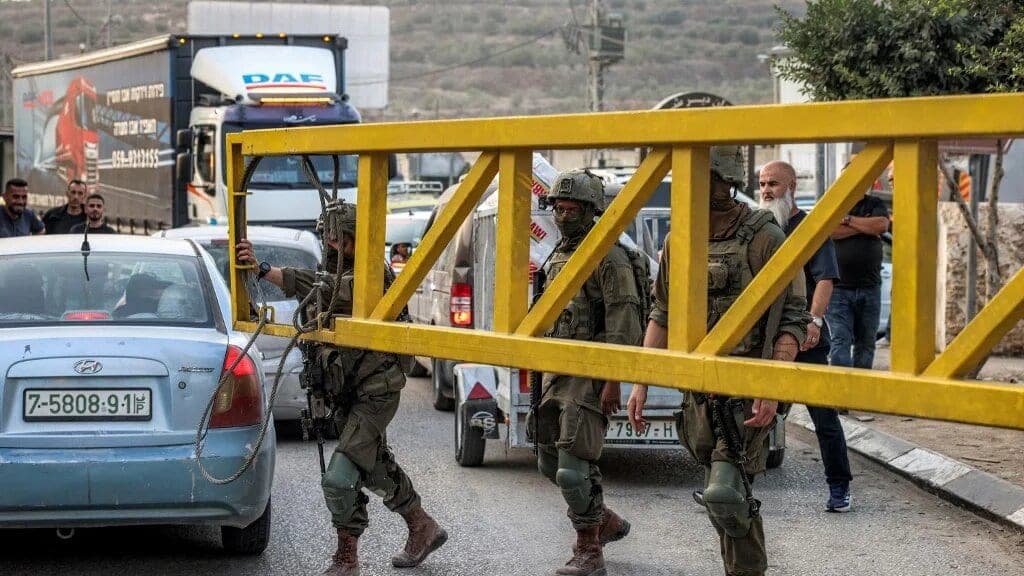
The operation followed a shooting attack by two Palestinians that killed two Israeli soldiers in Hebron on October 23; both attackers were killed in the exchange of fire. In the days after, Israeli forces sealed the city's entrances, closed major roads, and imposed what residents describe as a total blockade.
According to Hebron Municipality figures cited by Unicef on October 30, 483 families, 4,304 people including 1,845 children, had been displaced by the operation and the restrictions surrounding it.
At least 15 homes and facilities were demolished, including three residential properties. Two of those belonged to the men who carried out the shooting. The Hebron Chamber of Commerce and Industry estimates direct economic losses exceeded 12 million shekels a day, roughly $3.8 million, with 327 commercial establishments shut down and about 1,350 people left without livelihoods during the operation.
Among the businesses destroyed was Iyad al-Qawasmi's used vehicle parts facility in Farsh al-Hawa, a three-dunum lot holding 600 vehicles. Qawasmi said soldiers gave him one hour to evacuate before the demolition. When he asked for a written order rather than a verbal instruction, he said soldiers told him an Israeli court had already issued the decision and that he had to comply. He said he received no prior notice, and that in the nine years since he opened the business in 2016, it had only once before been entered by Israeli forces, when surveillance cameras were confiscated.
Qawasmi brought in a bulldozer of his own to try to salvage equipment during the hour he was given. Army and settler bulldozers then entered the site and, he said, seized at least 400 vehicles along with other equipment before the facility itself was razed days later.
"On top of my losses, which exceed 2.5 million shekels ($790,000), they confiscated the vehicles and stole the property I had inside the facility."
The site, he said, had been destroyed so completely that the Halhul mountains, previously blocked from view by the facility, are now visible across the rubble.
Middle East Eye reported that Israel has faced accusations of collective punishment over the scale of the response. Hebron now faces the task of clearing debris, assessing damage and reviving an economy brought to a standstill by the blockade.
Sources & Documentation
- Israeli army ends 11-day Hebron raid after looting and vandalising Palestinian homes — Middle East EyePrimary source, includes named resident testimony and Hebron Chamber of Commerce figures
Related Coverage

UN: Settlers Carried Out 397 Attacks in West Bank in October, Most Since Monitoring Began in 2006
OCHA documented 397 settler attacks in the West Bank in October 2026, the highest monthly total since UN monitoring began in 2006, many tied to the olive harvest.

Retired Israeli Air Force Intelligence Chief Detained After Confronting Settler Attack on Olive Pickers Near Duma
A retired Israeli brigadier general and former El Al CEO was detained after intervening when a settler attacked Palestinian women harvesting olives near Duma.
Israel Holds 23-Member International Delegation, Including British MPs, for Hours at Jordan Crossing Before Barring West Bank Entry
Israeli soldiers held a 23-member delegation, including UK MPs, at the King Hussein Bridge for up to nine hours and refused them entry to the West Bank.