
UN and B'Tselem Count Over 900 West Bank Checkpoints as Israeli Army Closes Beit El Gate Daily to Clear Road for Settlers
Field documentation shows a fixed daily closure pattern at the Beit El checkpoint timed to Palestinian rush hour, part of a network of more than 900 movement obstacles across the occupied territory.
Source: Middle East Eye · published November 11, 2026
A video circulated alongside a Middle East Eye investigation shows the kind of scene that recurs daily across the occupied West Bank: vehicles backed up nose to tail at an iron gate checkpoint, engines idling, drivers waiting on a closure that has nothing to do with the road's physical capacity. The footage illustrates what field monitors have logged for months at crossings like Beit El, known locally as the DCO after the Israeli military's District Coordination Office beside it.
According to field documentation compiled by the UN's humanitarian office (Ocha) and the Israeli human rights group B'Tselem, the West Bank now contains more than 900 fixed and intermittent movement obstacles, including checkpoints, iron gates, earth mounds, roadblocks and trenches. Ocha counts 232 iron gates alone, with at least 120 installed in 2025. A Palestinian commission that monitors the separation wall and settlements puts the total figure at 942. Around 160 of these closure points sit in the immediate vicinity of Ramallah and al-Bireh, a concentration exceeded only in Hebron.
Field monitors document that the Beit El checkpoint operated on a 24-hour basis before October 2023. The army closed it outright after the October 7 attacks and did not reopen it to Palestinian vehicular traffic until June 2024, following a period in which, according to the reporting, Israeli settlers stoned cars at the gate and demanded it stay closed. The report attributes a quote to the head of the Beit El settlement council calling the reopening "folly." Occupation Watch has not independently verified this quote or the settler stoning incidents described, and notes both remain sourced to the original report rather than to named, dated incident records.
The checkpoint is abruptly closed to Palestinian vehicular traffic in both directions at 4pm sharp, remaining shut until 9pm to clear the roadway for settlers.
That daily closure window, documented through field observation rather than military statement, coincides with the hours when workers, students and residents of Ramallah and al-Bireh attempt to return to surrounding towns and villages, and with increased settler traffic along the same roads. No Israeli military statement explaining the rationale for the 4pm-to-9pm closure is cited in the record, and the characterization of the timing as deliberate rather than capacity-driven is the reporting's analysis, not an official admission.
What is established without dispute is the scale of the infrastructure itself: a documented, UN-counted network of hundreds of gates and obstacles layered atop a separation wall that runs, by widely cited estimate, 85 percent inside the West Bank rather than along the 1967 line. Those figures come from institutional monitoring, not advocacy estimate alone, and they describe a permanent architecture governing who may move, when, and along which route, for a population of 3.4 million Palestinians living under it.
Sources & Documentation
- How Israel has engineered a system of apartheid on West Bank roads — Middle East EyePrimary source, opinion/investigative piece citing Ocha and B'Tselem field data
Related Coverage
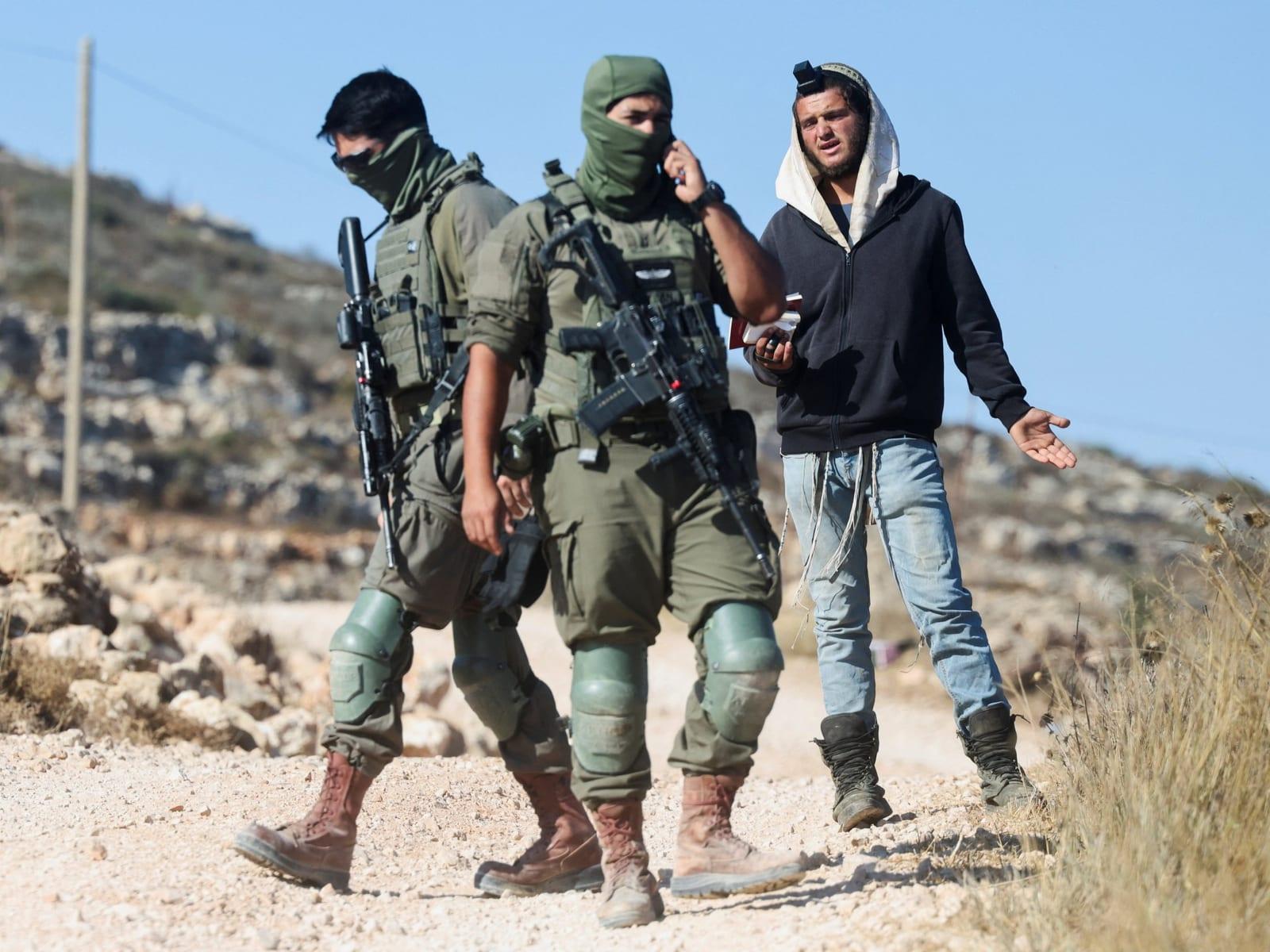
Al Jazeera Investigation Names Settlers Who Attack as Civilians, Then Return in IDF Uniform
An Al Jazeera investigation uses facial matching and witness testimony to document named settlers who attack Palestinians as civilians and later return in military uniform to enforce order.

Palestinian Commission Tallies 9,518 Israeli Demolition and Stop-Work Notices in West Bank Since 2015
A Palestinian commission documents 9,518 demolition and stop-work notices since 2015; UN data adds nearly 12,000 structures demolished and 18,000 displaced.

Nachala Settlers Say They'll Relocate, Not Retreat, as Israel Prepares to Clear Gaza-Border Outpost
Nachala settlers vow to keep pushing to resettle Gaza after Israeli authorities move to dismantle their unauthorized outpost near the border, testing a possible new government.