
Netanyahu Told The New York Times 9/11 Was 'Good' for Israel. Documents Show the Aid and Legal Crackdown That Followed.
A quarter-century after the attacks, the record of U.S. military aid, intelligence-sharing and anti-terror statutes traces how Washington's post-9/11 security doctrine became a shield for Israeli policy toward Palestinians.
Source: Al Jazeera English · published September 11, 2026
On the morning of September 11, 2001, with the World Trade Center still burning, The New York Times asked Benjamin Netanyahu, then a former Israeli prime minister, what the attacks meant for U.S.-Israel relations.
"It's very good," he said, then corrected himself. "Well, not very good, but it will generate immediate sympathy," adding that the attack would "strengthen the bond between our two peoples."
The quote, reported contemporaneously by the Times and widely archived since, is the anchor of an argument laid out by Yousef Munayyer, senior non-resident fellow at Arab Center Washington DC and former executive director of the U.S. Campaign for Palestinian Rights, in a September 11 essay for Al Jazeera. Munayyer's claim is not that Netanyahu caused what followed. It is that he named it before it happened.
The pre-9/11 gap
Munayyer's account places the remark against a specific backdrop. Between the end of the Cold War and 2001, Israel had lost the framing that had defined its U.S. relationship for decades, a democracy standing against Soviet-aligned Arab states. As the Berlin Wall fell and apartheid ended in South Africa, Israel was suppressing the first Palestinian Intifada. That mismatch, in Munayyer's telling, coincided with the period of heaviest U.S. diplomatic investment in Israeli-Palestinian peace efforts and the most consistent American pressure on settlement expansion.
What changed after
What followed 9/11, according to the documented record cited in the piece, is not a single policy but a pattern across three tracks: intelligence collaboration between U.S. and Israeli agencies expanded; U.S. financial support to Israel grew, a trend traceable in State Department and congressional appropriations records; and material-support and anti-terrorism statutes, broadened for the war on terror, were used domestically in ways that reached Palestinian advocacy and organizing in the United States.
The essay also describes a discursive shift running alongside the legal and financial one. Palestinians, in this account, became easier to frame to American audiences as a security problem rather than a population under military occupation, and critics of Israeli policy were more readily sorted into an "extremist" category, producing what Munayyer calls a chilling effect on public debate.
Fact versus interpretation
The Netanyahu quote is established fact, sourced to contemporaneous Times reporting. The growth in U.S. military aid to Israel after 2001 and the expansion of material-support law are documented in congressional and State Department records. The claim that these developments trace directly to the discursive alignment Munayyer describes, radical Islam replacing communism as the shared American-Israeli adversary, is his interpretive argument, not an item in any single government filing. It is presented here as analysis, not verdict.
What the twenty-five-year record does show, without dispute, is the trajectory: rising aid totals, deepening intelligence-sharing infrastructure, and legislative tools built for counterterrorism that have since been applied to Palestinian rights advocacy inside the United States. Whether that trajectory began with a remark made across the river from a burning skyline, or merely found in it an early and candid expression, is the question the essay leaves for the reader.
Further Documentation
Sources & Documentation
- How 9/11 helped Israel sell its war on Palestinians to America — Al Jazeera EnglishOpinion essay by Yousef Munayyer, Arab Center Washington DC
Related Coverage
 Video
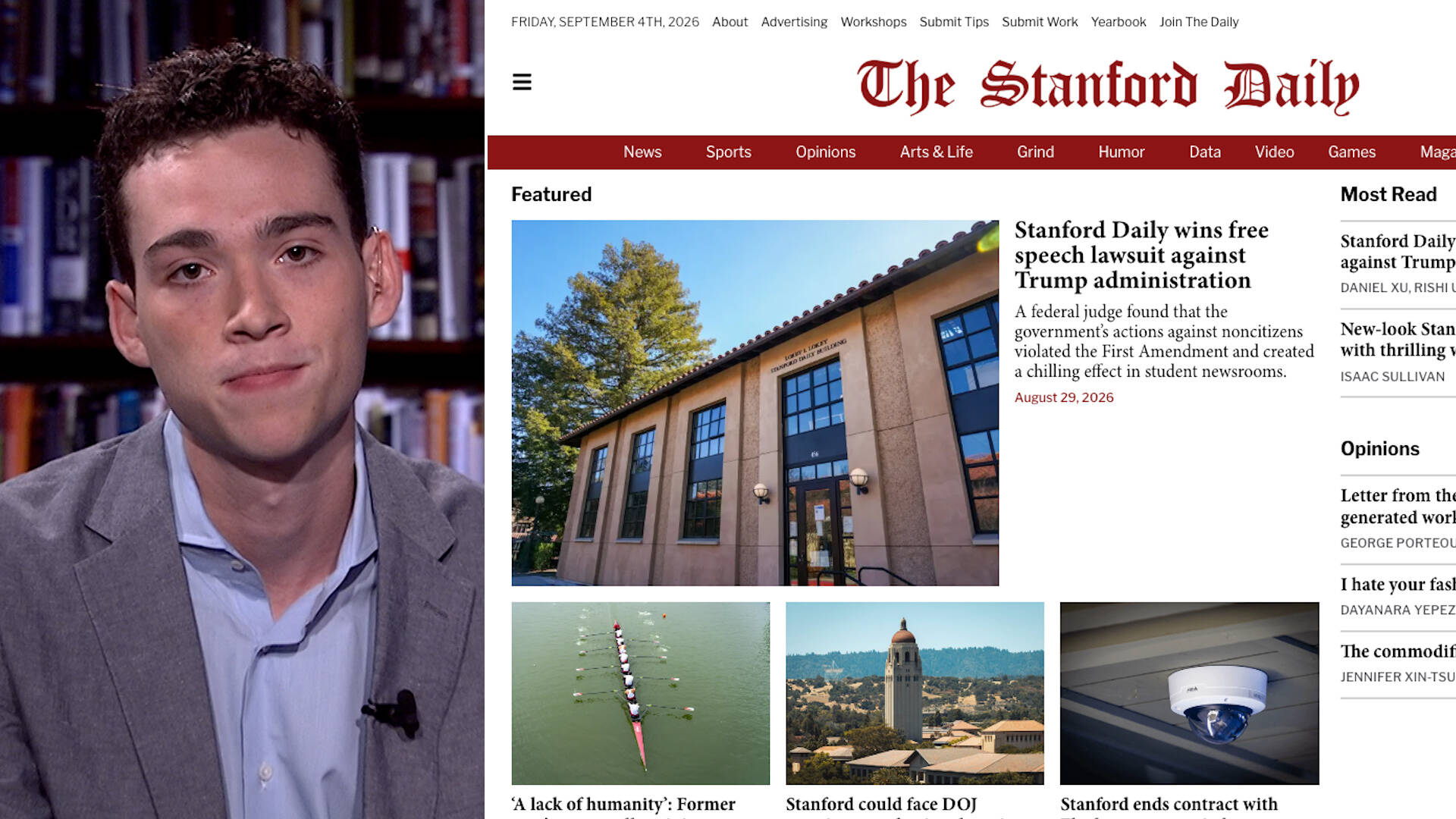
VideoFederal Judge Rules Trump Administration Violated Rights of International Students Over Pro-Palestinian Speech
A federal judge ruled the Trump administration violated international students' rights by threatening deportation over pro-Palestinian speech, in a suit brought by The Stanford Daily.

Columbia University Paid AIPAC and ADL Affiliates While Suspending Pro-Palestine Student Groups, Tax Filings Show
Columbia's tax filings show $175,000 to AIPAC-linked groups and $7,200 to the ADL as the university suspended pro-Palestine student organizations and called in police.

Fetterman Skipped Veterans' Meeting for Fox News Israel Interview, WSJ Investigation Finds
A Wall Street Journal investigation documents Sen. John Fetterman skipping constituent meetings and Senate duties while coordinating pro-Israel messaging with the Israeli ambassador.