
Israel to Revoke Entry Permits for 180 Palestinian Teachers in East Jerusalem Schools
A chemistry teacher who has commuted through checkpoints since 1998 is among those losing the permits that let West Bank teachers reach their classrooms, as a government plan ties school funding to adopting the Israeli curriculum.
Source: Al Jazeera English · published November 6, 2026
Jamal Shalabi has made the same commute since 1998: out of el-Bireh in the occupied West Bank, through Israeli checkpoints, into occupied East Jerusalem, where he teaches chemistry. He is 66 years old. This year his school administration told him his travel permit, the document that makes that commute legal, is one of 180 set to be revoked when it expires at the end of the 2026-27 academic year.
The permits are the backbone of Palestinian teaching staff in East Jerusalem, a territory Israel occupies and considers part of a unified Jerusalem under its control, despite its status under international law as occupied Palestinian territory. Even while valid, Shalabi said, the permits bind teachers to fixed hours and to the school building itself.
"These permit restrictions have been in place since the war on Gaza in 2023; we can no longer reach the Al-Aqsa Mosque to pray, nor can we accompany students on school field trips, as the permits are strictly limited to the workplace," Shalabi said.
He said that for the first time, teachers were barred from entering Jerusalem for an entire week during the recent Jewish holiday of Sukkot. Delays in permit issuance, in January and again this September, when documents did not arrive until two weeks after the school year began, have already triggered strikes among East Jerusalem schools.
A funding lever on curriculum
The permit crackdown runs alongside a broader government plan, framed officially as reducing socioeconomic gaps in East Jerusalem, a city with a Palestinian majority that Israel has long worked to offset through settlement expansion. The plan conditions funding for new Palestinian schools on adoption of the Israeli curriculum and funds teacher training inside the Israeli education system.
The Israeli human rights organization Ir Amim found that roughly half of the plan's education budget for East Jerusalem is directed toward expanding the Israeli curriculum, and that the Israeli curriculum requirement is a precondition for opening new state-funded schools, pressure that falls on both administrators and parents.
Ir Amim also flagged a law barring employment of teachers who hold degrees from Palestinian institutions, which the organization warns will deepen an existing teacher shortage in East Jerusalem.
The numbers tell the trajectory. Palestinian students studying the Israeli curriculum in East Jerusalem numbered only in the hundreds fifteen years ago. By 2020 that figure passed 10,000. By 2024 it was nearly 20,000, according to Palestinian officials. Ir Amim put the 2025 figure above 27,000. Palestinian officials now estimate more than 45,000 students, about 38 percent of the city's total student population, are enrolled in the Israeli curriculum for 2026-27.
A school principal in East Jerusalem, who spoke to Al Jazeera on condition of anonymity citing fear of repercussions from Israeli authorities, described the curriculum's expansion as the culmination of years of policy aimed at controlling Palestinian education in the city. He characterized the material taught as a distorted version of history that erases Palestinian national identity, a characterization Occupation Watch notes is his assessment and was not independently verified against curriculum texts in the available record.
Sources & Documentation
- How Israel is tightening its grip on Palestinian schools in East Jerusalem — Al Jazeera English
Related Coverage
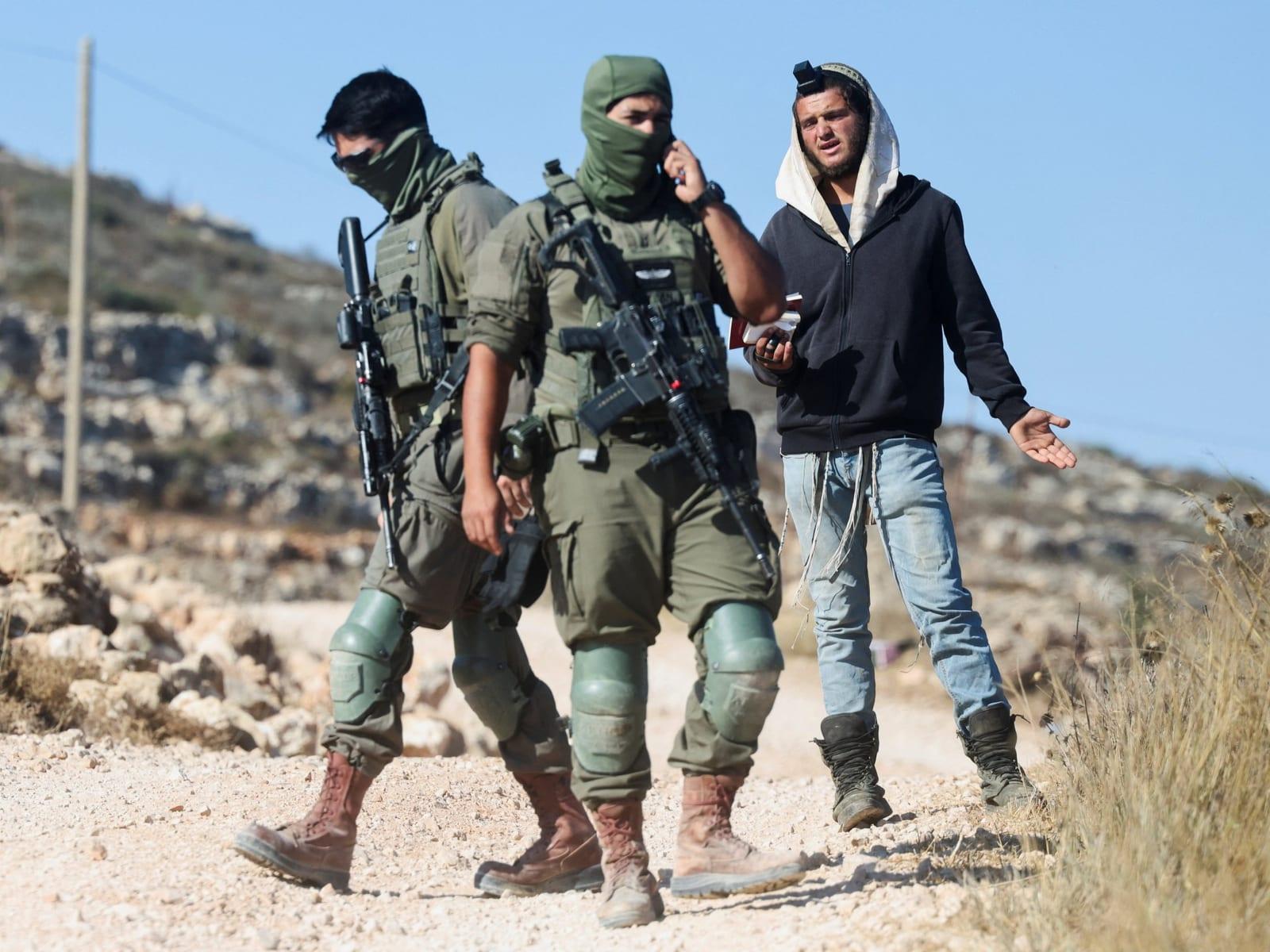
Al Jazeera Investigation Names Settlers Who Attack as Civilians, Then Return in IDF Uniform
An Al Jazeera investigation uses facial matching and witness testimony to document named settlers who attack Palestinians as civilians and later return in military uniform to enforce order.

Palestinian Commission Tallies 9,518 Israeli Demolition and Stop-Work Notices in West Bank Since 2015
A Palestinian commission documents 9,518 demolition and stop-work notices since 2015; UN data adds nearly 12,000 structures demolished and 18,000 displaced.

Netanyahu Vows to 'Destroy' Hebron Neighborhood, Cites Jenin Expulsion Model
Netanyahu announced plans to raze a Hebron neighborhood and expel residents, citing the 2025 Jenin camp expulsions as the model, after a checkpoint attack killed two soldiers.